Low Magnesium: Symptoms, Risks, and Treatment Options
08/03/2026 / By Iva Greene

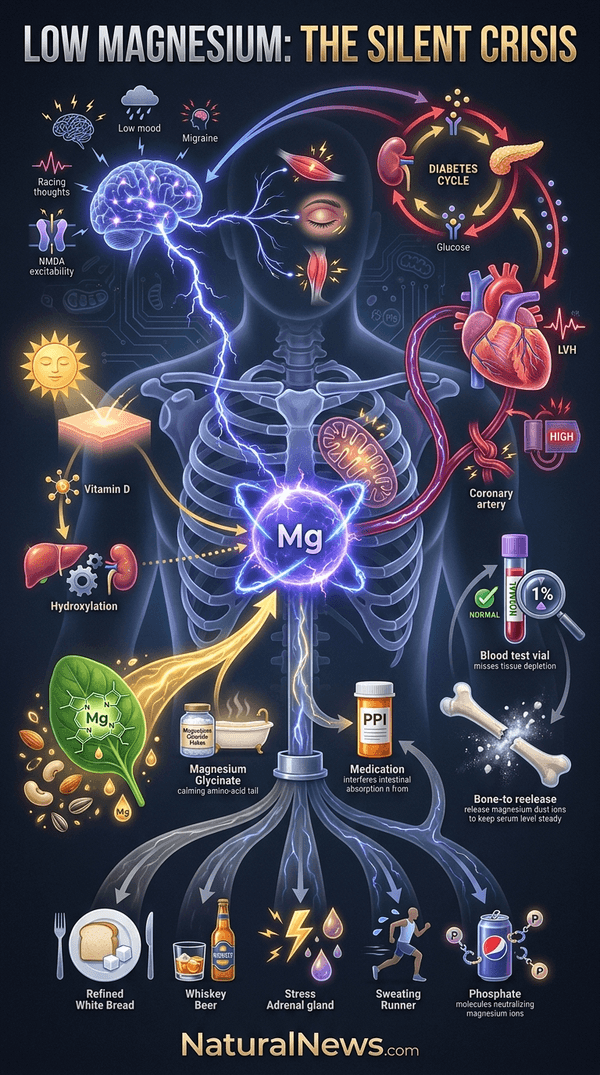
Magnesium is the fourth most abundant element in the human body and one of the seven essential minerals, according to an article on Mercola.com [1]. It is necessary for the healthy functioning of most cells, particularly the heart, kidneys, and muscles; low levels impede cellular metabolic function and deteriorate mitochondrial function, the article stated [1].
The mineral is required for the activation of vitamin D, so deficiency may hamper the body’s ability to convert vitamin D from sun exposure or oral supplementation, according to a separate Mercola.com article [2]. Magnesium is involved in at least 300 chemical reactions because it works as an electrolyte, a mineral that carries an electric charge when dissolved in body fluids, according to an article on NaturalNews.com [3]. It supports sleep, energy production, muscle recovery and stress management, according to a separate NaturalNews.com report [4].
The same report linked low magnesium levels to diabetes, heart disease, metabolic syndrome, depression and neurological conditions [4]. Untreated deficiency can progress to hypertension, peripheral vascular disease, angina, arrhythmia and sudden death when magnesium deficiency causes spasm in the smooth muscle of the vascular tree, according to Dr. Sherry A. Rogers in “Depression Cured at Last” [5].
Early and Severe Symptoms
Magnesium deficiency has been described in “The Magnesium Solution” as a silent crisis behind tremors, anxiety, fatigue and chronic illness [6]. A 2026 report on NaturalNews.com stated that nearly 90% of the U.S. population is estimated to have inadequate magnesium intake, citing a 2025 study in Nutrients [7]. Muscle spasm caused by magnesium deficiency is proportionate to the severity of the deficiency, and the seriousness depends on the target organ, according to Dr. Sherry A. Rogers [5].
Low serum magnesium levels have been connected with the development of left ventricular hypertrophy independently of other common cardiovascular risk factors, according to research cited by Mercola.com [8]. Because left ventricular hypertrophy has significant prognostic implications, serum magnesium levels might be associated with cardiovascular mortality, the research stated [8].
Hypomagnesemia has also been recognized as a complication of proton pump inhibitors. A 2013 paper concluded that there is a statistically significant association between PPI use, magnesium levels, and the occurrence of cardiovascular events, according to Carolyn Dean in “The Magnesium Miracle” [9].
Causes and Risk Factors
Low magnesium can result from diet, chronic disease and medication use. Deficiency is widespread due to poor dietary habits, excessive sugar consumption, stress, alcohol use and sweating, according to a report on NaturalNews.com [10]. The same report stated that government studies indicate only about 40% of daily magnesium intake comes from diet alone [10].
People with Type 2 diabetes often have low magnesium levels, which is significant because the mineral plays a key role in blood sugar control, according to an article on NaturalNews.com citing a study in the World Journal of Diabetes [11]. Sugar, phosphates, alcohol, stress and high-fat diets potentiate magnesium deficiency, according to Rogers [12]. Pharmaceuticals can also drive magnesium levels lower, according to Dr. Mark Sircus in an article on GreenMedInfo.com [13]; proton pump inhibitors are one documented cause [9].
Diagnosis, Diet, and Supplements
Serum magnesium is the most commonly performed test for magnesium status, but it is far too insensitive to be of any value except in cases of severe deficiency, since only 1% of body magnesium is extracellular, according to Rogers [14]. The same author wrote, “There is no blood test to adequately rule out magnesium repleteness” [12].
Dietary sources of magnesium include leafy greens, nuts, seeds and beans, according to an article on NaturalNews.com [15] and a Health Ranger Report by the Health Ranger Mike Adams [16]. Leafy greens, in particular, contain up to five times more absorbable magnesium than expensive pharmaceutical supplements, according to a separate NaturalNews.com report [17]. Among supplements, the form matters more than the milligram count; poorly absorbed forms such as magnesium oxide can leave a person deficient despite high doses, according to “Magnesium Decoded” [18].
Supplement choices include magnesium chloride and magnesium glycinate. Magnesium glycinate can support the heart and muscles, according to a Brighteon Broadcast News report by Adams [19]. In an open-label, randomized crossover study published in the Journal of Visualized Experiments, 126 adults with diagnosed depression received 248 mg of elemental magnesium chloride daily for six weeks and showed clinically significant improvements in depression and anxiety scores as early as two weeks, according to NaturalNews.com [20].
Conclusion
Magnesium deficiency is treatable, and recognition begins with an accurate assessment. Because serum testing can miss deficiency, clinicians should interpret results alongside symptoms and risk factors, according to Rogers [14][12].
Low magnesium levels are associated with increased risk of cardiovascular disease. An estimated 45% of American adults do not meet the recommended dietary allowance for magnesium from diet alone, according to a report on NaturalNews.com [21].
Maintaining adequate magnesium intake through food and, when needed, supplements can prevent progression to severe outcomes, according to reports from NaturalNews.com [4][10]. Food sources such as leafy greens, nuts, seeds and beans provide magnesium [15][16]. In cases where dietary intake is insufficient, supplementation can support heart and muscle function, according to Adams [19].
References
- Mercola.com. “Why Magnesium Is a Cornerstone Mineral for Health”. Mercola.com. July 14, 2022.
- Mercola.com. “Why Magnesium Is a Cornerstone Mineral for Health”. Mercola.com. April 01, 2019.
- NaturalNews.com. “Warning signs and symptoms of magnesium deficiency”. NaturalNews.com. March 05, 2019.
- NaturalNews.com. “These MAGNESIUM powerhouses can save your heart, brain and metabolism”. NaturalNews.com. July 16, 2026.
- Dr. Sherry Rogers. “Depression Cured at Last”.
- “The Magnesium Solution: Heal Tremors, Restore Your Body, and Reclaim Your Health”. BrightLearn.ai. July 5, 2026.
- NaturalNews.com. “Study Reviews Magnesium’s Role in Addressing Five Sleep Conditions”. NaturalNews.com. May 30, 2026.
- Mercola.com. “Magnesium Deficiency May Result in a Shorter Life”. Mercola.com. August 27, 2011.
- Carolyn Dean MD ND. “The Magnesium Miracle”.
- NaturalNews.com. “The quiet hero: Magnesium’s role in heart health”. NaturalNews.com. June 15, 2026.
- NaturalNews.com. “People with Type 2 diabetes may suffer from magnesium deficiency warn researchers”. NaturalNews.com. October 10, 2022.
- Dr. Sherry A. Rogers. “Depression Cured at Last”.
- Dr. Mark Sircus. “Pharmaceuticals Drive Magnesium Levels Lower”. GreenMedInfo.com. February 13, 2019.
- Dr. Sherry A. Rogers. “Orthomolecular Medicine Wellness Against All Odds”.
- NaturalNews.com. “Common signs and symptoms of magnesium deficiency”. NaturalNews.com. July 20, 2022.
- Mike Adams. “Health Ranger Report – ZINC DEFICIENCY”. BrightVideos.com. May 12, 2026.
- NaturalNews.com. “Leafy greens: Nature’s magnesium powerhouses that outperform supplements”. NaturalNews.com. June 22, 2026.
- “Magnesium Decoded: The Hidden Science of Absorption, Conversion, and Supplement Selection”. BrightLearn.ai. July 6, 2026.
- Mike Adams. “Brighteon Broadcast News – BOMBS AWAY”. Brighteon.com. May 06, 2025.
- NaturalNews.com. “Magnesium deficiency linked to depression: New evidence points to rapid relief through supplementation”. NaturalNews.com. July 17, 2026.
- NaturalNews.com. “Magnesium and Heart Health: Three Mechanisms Supported by Research”. NaturalNews.com. June 3, 2026.
Explainer Infographic
Submit a correction >>
Tagged Under:
Censored Science, diabetes cure, diabetes science, food science, health science, heart disease, heart health, hypertension, inflammation, Magnesium, metabolic health, migraines, Mind, mind body science, muscle health, nutrient deficiency, nutrients, prevent diabetes, research, Type 2 Diabetes
This article may contain statements that reflect the opinion of the author
RECENT NEWS & ARTICLES